
Get your knowladge about Bundala national park
Bundala National Park – Complete Visitor Guide
Introduction
Bundala National Park is one of Sri Lanka’s most important and unique wildlife destinations, internationally recognized for its rich wetland ecosystems and birdlife. The park is a UNESCO Biosphere Reserve and was the first site in Sri Lanka to be declared a Ramsar Wetland. Originally designated as a wildlife sanctuary in 1969, Bundala was upgraded to a national park in 1993.
The park covers an area of approximately 3,698 hectares following its re-gazetting in 2004. It forms part of a larger protected landscape that includes nearby sanctuaries, enhancing its ecological significance.
Location & Zone
Yala National Park is situated in the Southern of Sri Lanka, bordering the Indian Ocean.
Distance from Colombo: approx. 245 km
Nearest town: Hambantota
Main entrance: Bundala Gate
Terrain (Landscape)
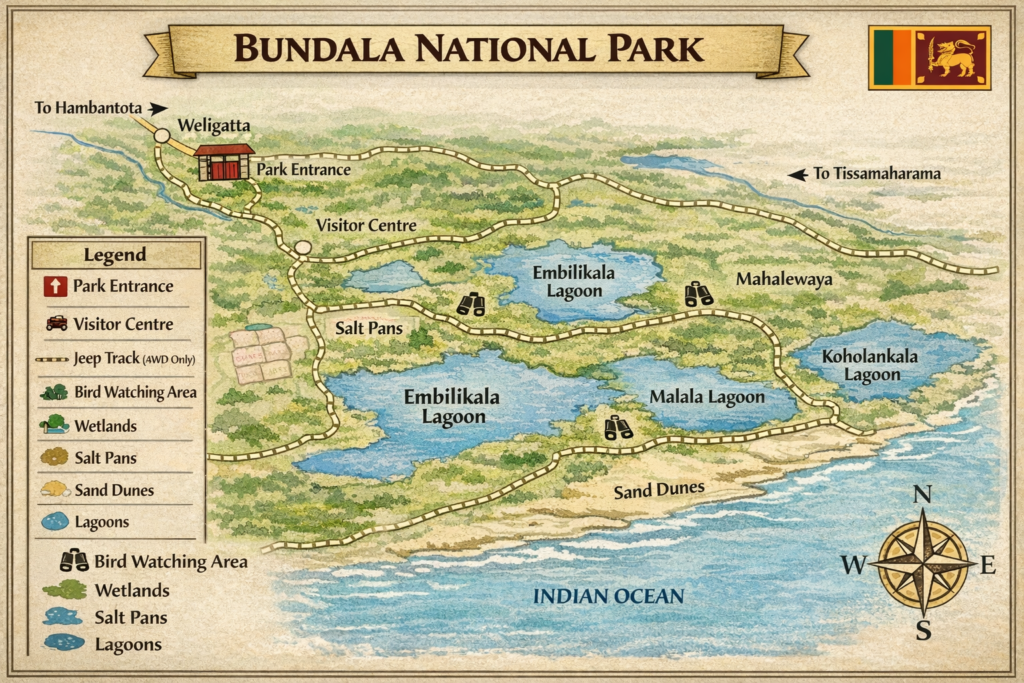
The terrain of Bundala National Park is diverse and unique, consisting of five shallow lagoons, salt pans, marshes, dry thorny scrub forest, sand dunes, and coastal habitats. The lagoons are brackish and support a wide range of aquatic life, making them ideal for bird feeding and breeding. The park lies in the low-country dry zone with elevations ranging from sea level up to about 10 metres.
Weather Condition
Bundala experiences a tropical monsoonal climate with an average annual temperature of around 27 degrees Celsius. Annual rainfall ranges between 900 and 1,300 millimetres, and humidity remains relatively high throughout the year. The dry season typically lasts from May to September, while the rainy season occurs mainly from October to January.
Humidity: Moderate to high
Early mornings and late afternoons are cooler and ideal for safari activities.
best time to visit
The best time to visit Bundala National Park is from November to March, which coincides with the peak migratory bird season and offers excellent opportunities to observe large flocks of flamingos and other water birds. The period from February to April is also favourable for general wildlife viewing. The most suitable times of day for safari are early morning and late afternoon. Morning safaris, usually starting around 5:30 AM, provide the best conditions for bird activity, cooler weather, and photography, while evening safaris offer good chances to observe mammals as temperatures begin to drop.
Flora and Fauna
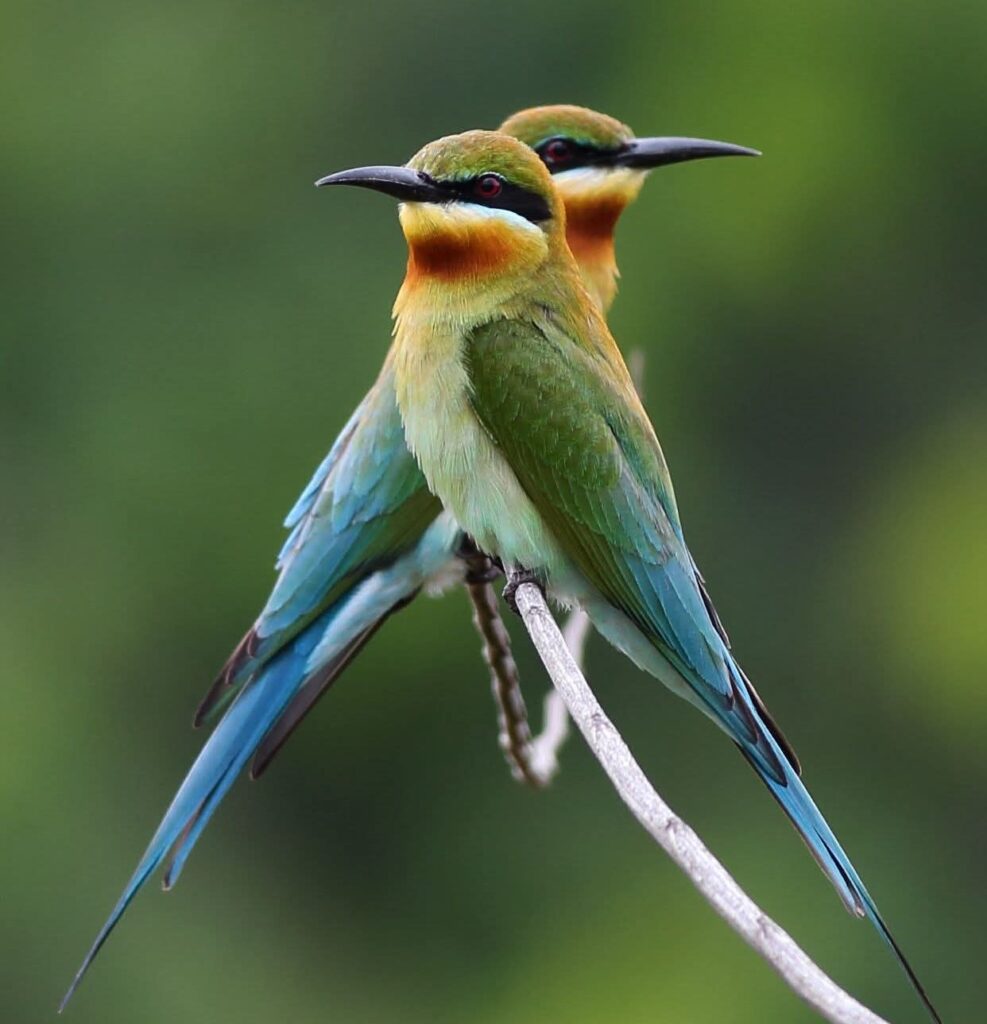
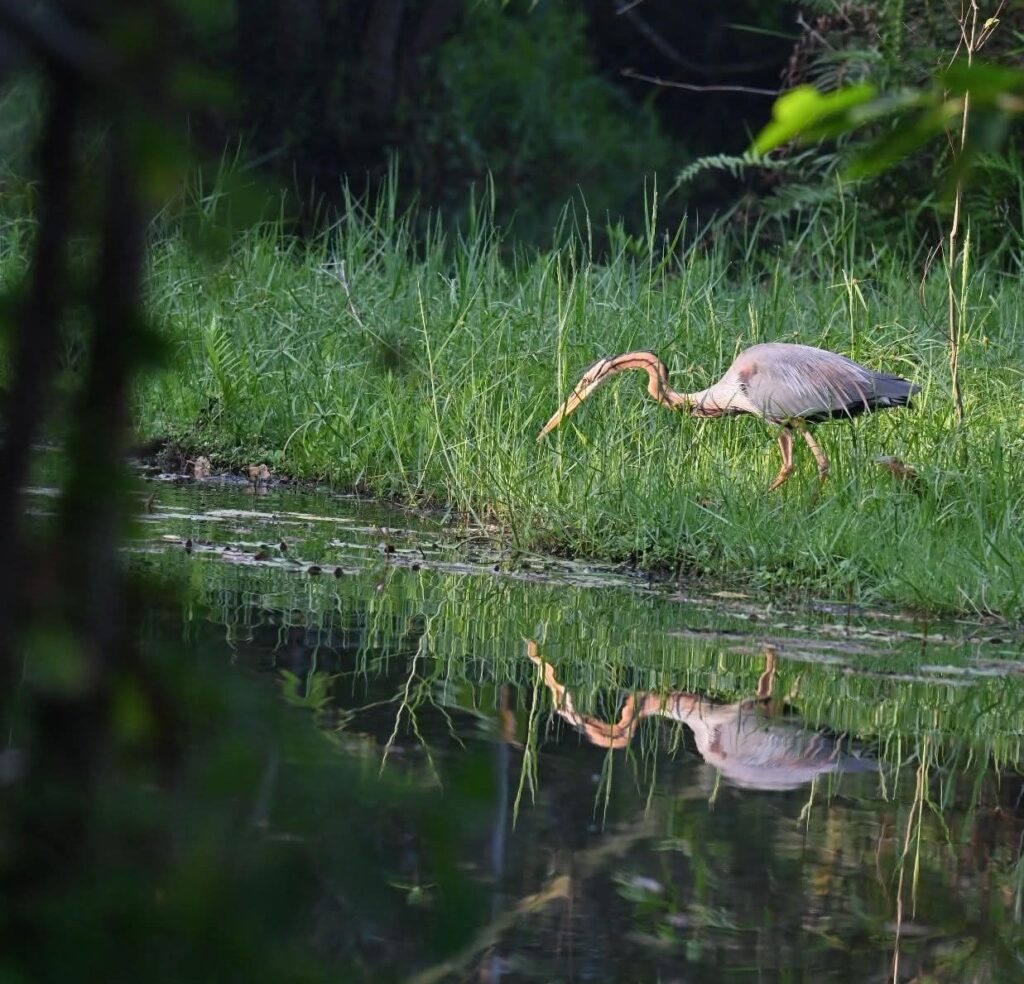
Bundala is especially famous for its birdlife, with 197 species recorded, including around 100 species of water birds. It is an internationally important wintering ground for migratory birds, with 58 migratory species visiting annually. The highlight is the greater flamingo, which arrives in large flocks often exceeding one thousand individuals. Other commonly seen birds include pelicans, painted storks, herons, ibis, spoonbills, cormorants, ducks, and a variety of waders.
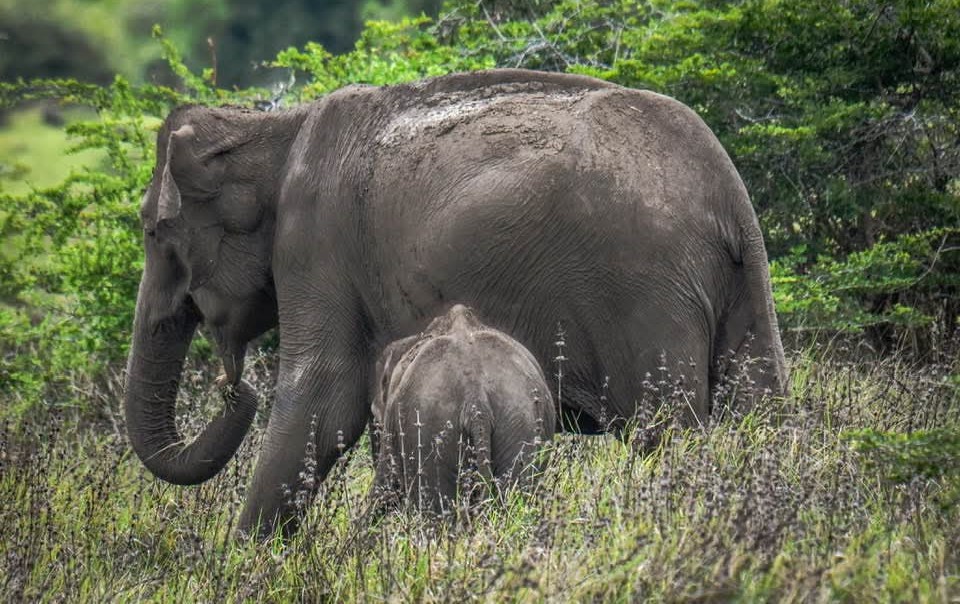
In addition to birdlife, the park supports a variety of mammals such as Asian elephants, leopards, spotted deer, sambar deer, wild boar, jackals, Monkeys, mongoose, and several small carnivores including fishing cats. Reptiles are also abundant, with species such as mugger crocodiles, saltwater crocodiles, monitor lizards, and pythons. The coastal areas near the park are important nesting grounds for sea turtles.
“We take you to a place you can’t even imagine.”
Or give us a call:
+94 77 8380 835